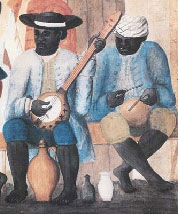
Claim: "Music was a tool used by African Americans to help cope with their enslavement".
4/4/2026
"Indeed cheerfulness and affability are two of the leading characteristics of our nation" (Equiano, 1789).
As kidnapped and sold Africans landed on American soil, the music they brought from home would later become one of their many tools for survival. Olaudah Equiano illustrates the Guinea musical culture in his autobiography. In Chapter one he writes how, "We [Africans] are all of a nation of dancers, musicians and poets. Any Cause of public rejoicing is celebrated in public dances, which are accompanied with songs and music suited to the occasion...This gives our dances a spirit and variety which I have scarcely seen elsewhere. (Equiano, 1789).
Enslavers banned the African Drum because of their fear of African Americans conspiring to escape through these instruments.
Banjos, wash boards, stomping, claping, and singing would quickly replace the drum. While rebranding popular combat dances like "Calinda", call and response songs would also become important to build community and share feelings of sorrow, joy, or hope with one another.
"Kumbaya" uses Gullah language to express African American pleas for a better life and to be saved by the Lord.
"I'm Troubled In Mind" expresses the grief and pain that many African Americans faced during enslavement.
"Blow, Cornie, Blow & Peas and Rice" were both songs sang as instructions and or pass times of field work that involved crops.
More Songs
4/4/2026
Kumbaya- Sung by H. Wylie (Damanged Record)Blow Cornie Blow/ Peas & Rice (Starts playing after 22 seconds)
Click here for more songs like ones above
Flip to page 54/188 to browse Slave songs.